← All articles

Cryopreservation

The science of freezing and storing biological samples, vitrification techniques, and long-term cell viability.

5 articles

Member Spotlight: From Beast Games star to longevity advocate with Tessa Mac
Blog
1 min read
Member Spotlight: From Beast Games star to longevity advocate with Tessa Mac
Beast Games star and matchmaker Tessa Mac shares her powerful journey into regenerative medicine, sparked by a friend’s cancer battle and solidified by her own "aha" moment regarding biological insurance. In the inaugural episode of Future Proof with Forever Labs podcast, she shares why she decided to freeze her Mesenchymal Stem Cells (MSCs) as the ultimate "low-hanging fruit" for long-term health. From setting world records to surviving California wildfires, Tessa explains how securing her youngest, healthiest cells allows her to live a high-octane life today with zero regrets for tomorrow.
AgingWomen's HealthMesenchymal stem cellsCryopreservation
Image-Storing-Your-Youngest-Stem-Cells
Blog
1 min read
Forever Labs
Why freezing your young stem cells matters today
Why freezing your young stem cells matters today. Bank your young Mesenchymal Stem Cells (MSCs) today to secure a high-potency, genetically-matched 'medical reserve' for your future. Research shows that younger MSCs offer enhanced healing, boost cognitive function, and are linked to extended healthspan, providing an ideal resource for future regenerative therapies while eliminating the risk of immune rejection.
Cellular SenescenceHeart DiseaseCryopreservation
Hair follicle-associated-pluripotent (HAP) stem cells
Clinical
1 min read
Web
Hair follicle-associated-pluripotent (HAP) stem cells
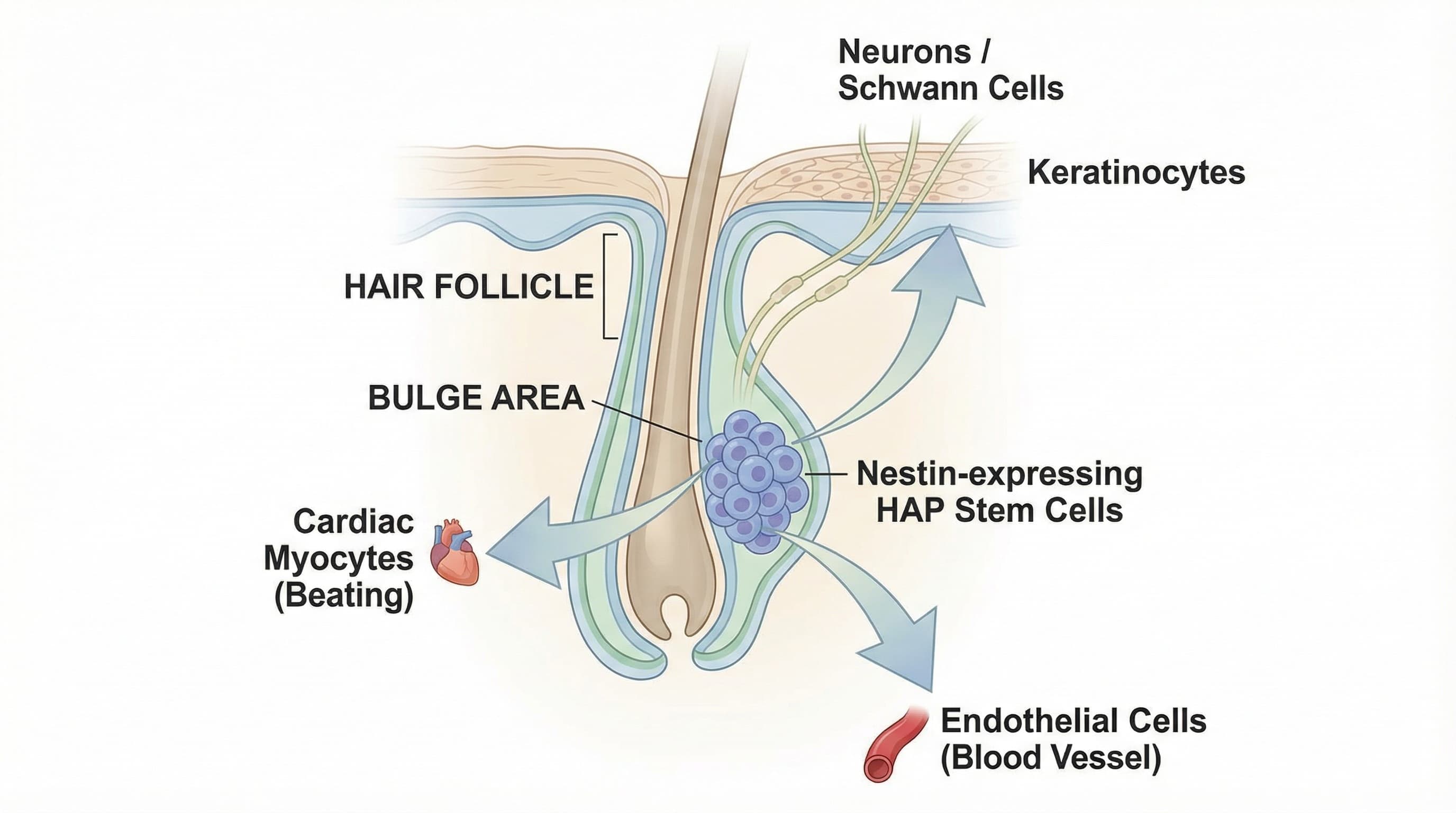
Hair follicles contain several kinds of stem cells. One group, called hair follicle-associated‑pluripotent (HAP) stem cells, sits in the bulge region of the follicle and expresses the protein nestin. Laboratory studies show HAP cells can turn into many different cell types — neurons, glial cells (support cells in nerves), skin cells, smooth muscle, heart muscle, pigment cells and more [2,10,19,25]. HAP cells are easy to collect from the scalp, do not require genetic reprogramming, do not form tu
Hair FollicleNestin Expressing Stem CellsPeripheral Nerve RegenerationCryopreservation
AI generated image for: Long-term cryopreservation of bone marrow for autologous transplantation
Clinical
1 min read
Bone Marrow Transplant
Long-term cryopreservation of bone marrow for autologous transplantation
This study confirms that long-term cryopreservation of bone marrow for up to 7.8 years does not negatively impact hematopoietic stem cell viability or engraftment success. Results indicate that early-stage marrow collection can effectively preserve stem cell quality before cumulative damage from chemotherapy or radiation occurs. This research supports the long-term storage of autologous bone marrow as a reliable option for future transplantation.
Bone MarrowAutologous Hematopoietic Cell TransplantationCryopreservation

Explore more topics