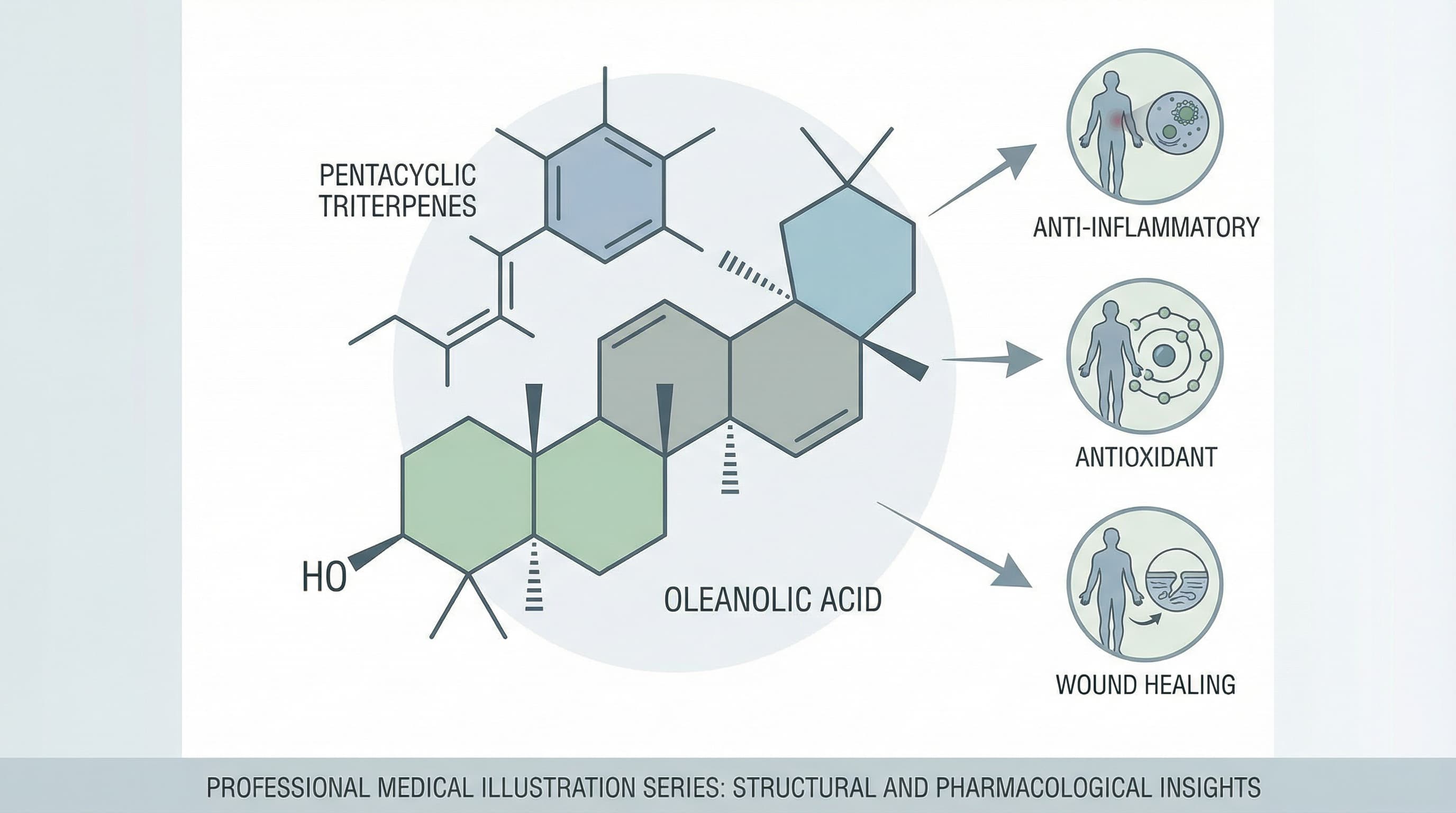
Semisynthetic Derivatives of Pentacyclic Triterpenes Bearing Heterocyclic Moieties with Therapeutic Potential
Medicinal plants have been used by humans since ancient times to treat various diseases and currently represent a major source of numerous active compounds, such as triterpenes. Pentacyclic triterpenes have shown a wide range of biological activities, including anti-cancer, anti-diabetic, and anti-inflammatory effects that could be beneficial in therapy. Unfortunately, their use is often limited due to their solubility issues in the body. One common method to enhance their bioavailability is through chemical modification, particularly by introducing different functional groups, including heterocycles. This article reviews the latest studies on modified pentacyclic triterpenes, summarizing their activities and the relationship between their structure and effectiveness.
Key Points
Medicinal Plants: Historically, humans have relied on plants for treating diseases. Today, many effective medications derive from plant-based compounds.
Pentacyclic Triterpenes: These molecules, found in various plants, exhibit a broad spectrum of therapeutic benefits. They can be transformed to improve their water solubility, making them more effective in clinical use.
Chemical Derivatization: Altering the chemical structure of triterpenes can enhance medicinal properties and bioavailability. Key modification sites for improving their effectiveness include the C-3, C-28, and C-30 positions of the core structure.
Clinical Implications
The research indicates that semisynthetic derivatives of pentacyclic triterpenes show promise in clinical applications by enhancing their solubility and therapeutic efficacy. With the continuous advancements in chemistry, these modified compounds could become significant players in regenerative medicine and preventative health strategies.
In summary, exploring the potential of triterpenoid derivatives through structural modification presents a valuable avenue in pharmacological research. Their versatility suggests that they might be used not just as standalone therapies but also as complementary agents in existing treatment plans.
Consideration of biological effects and mechanisms of action are essential for future developments in this field.
Exploration and development of these compounds can lead to innovative treatments for chronic diseases and contribute to longevity by enhancing quality of life as we age.
Ready to learn more?
Subscribe to our newsletter and book your free, 15-minute consultation with Forever Labs today.
Research Details
Pmc
Cite this article: Pmc. "Semisynthetic Derivatives of Pentacyclic Triterpenes Bearing Heterocyclic Moieties with Therapeutic Potential". Published December 2, 2025. Available at: https://pmc.ncbi.nlm.nih.gov/articles/PMC9572482/
Access Original Research
View the complete study and detailed methodology from the original source.
Read Full Study↗

