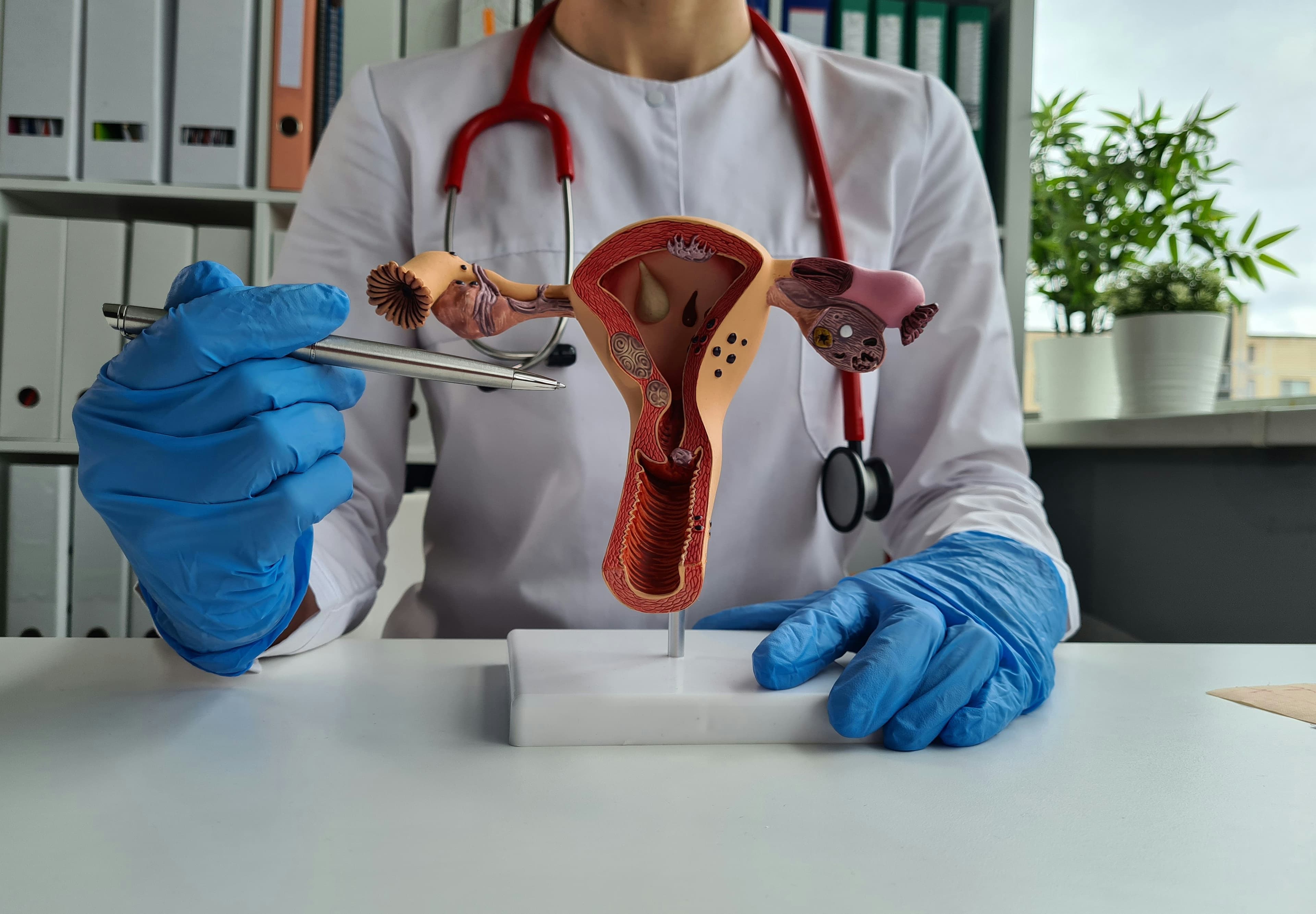
Irregular cycles, hormonal imbalance, weight gain, fertility struggles, metformin, IVF. Discuss. Experiment. Repeat. For years, conversations around Polycystic Ovary Syndrome (PCOS) have followed the same script.
But the science behind PCOS is evolving, and during National Women’s Health Month, we’re exploring what that means for the future of treatment.
Instead of focusing only on symptom management, researchers are beginning to explore whether regenerative medicine could help support healthier ovarian function and more lasting treatment outcomes.
That shift matters because PCOS is increasingly being understood as far more than a hormone disorder. Emerging research points to a complex condition involving inflammation, metabolic stress, immune dysfunction, and altered cellular signaling throughout the reproductive system.
And that is exactly where stem cell science becomes interesting.
Recent studies are opening a new chapter in PCOS research, one focused less on “forcing ovulation” and more on restoring a healthier ovarian environment.
A Closer Look, Cell by Cell
One of the most important breakthroughs this year came from researchers led by Elisabet Stener-Victorin, Qiaolin Deng, and Sophie Petropoulos at the Karolinska Institutet. They used single-cell sequencing to analyze the endometrium, the tissue lining the uterus, in women with PCOS. Instead of analyzing the endometrial tissue as a whole, researchers used single-cell sequencing technology to study individual cells one by one, allowing them to identify specific disruptions in immune signaling, inflammatory responses, and implantation-related pathways that may be hidden in broader tissue analysis.
This helps explain why many women with PCOS struggle not only with ovulation, but also with miscarriage risk and implantation challenges. The issue may not be limited to the egg itself. The surrounding reproductive environment may also be impaired.
For decades, fertility treatment largely focused on stimulating the ovaries to produce eggs. But newer regenerative approaches are exploring whether improving the health of ovarian and endometrial tissues could lead to better outcomes overall.
In other words, researchers are asking whether the problem is not simply “Can we produce an egg?” but rather “Can we create a healthier biological environment for reproduction?”
That is a very different question.
Back to the Beginning
A recent analysis presented at the 41st Annual Meeting of the European Society of Human Reproduction and Embryology in Paris explored how epigenetics could help explain why PCOS tends to run in families. Researchers believe certain metabolic and hormonal changes may influence how genes are expressed across generations, even without altering the DNA sequence itself.
That means PCOS may involve inherited biological patterns shaped by inflammation, metabolism, and hormonal exposure over time. For many women living with PCOS, that reframes the experience entirely, as PCOS is often treated as a personal failure of lifestyle or discipline. Emerging evidence suggests it may be rooted in complex biological programming that begins long before symptoms appear.
Ovaries, Our Dynamic Heroes
Another fascinating area of research involves ovarian reserves.
For years, medicine operated under a relatively fixed view of female fertility: women are born with all the eggs they will ever have, and the reserve simply declines over time.
That framework is now becoming more nuanced. Recent primate research at UCLA mapping the origins of the ovarian reserve has given scientists a much more detailed understanding of how ovarian support cells develop and communicate during early life.
This does not mean scientists have discovered a way to create unlimited new eggs – they have not. But researchers are learning that ovarian tissue is biologically active, highly communicative, and deeply influenced by its surrounding environment. That opens the door to therapies designed to preserve or optimize ovarian function rather than simply bypass it.
For women with PCOS, that distinction matters because fertility challenges are not necessarily caused by a depleted ovarian reserve. While many women with PCOS actually have a relatively high number of ovarian follicles, how those follicles develop and mature over time matters. Researchers are now exploring whether regenerative therapies could help restore healthier follicular signaling and development.
Stem Cells As Biological Coaches
When it comes about stem cells and PCOS research, scientists are increasingly interested in something very specific: cell signaling.
Mesenchymal stem cells appear to release tiny biologically active particles called extracellular vesicles or exosomes. These particles contain proteins, RNA, growth factors, and signaling molecules that help cells communicate.
In animal studies conducted by scholars from scholars at Kermanshah University of Medical Sciences, these stem cell-derived signals have shown the ability to:
- Reduce ovarian inflammation
- Improve follicle development
- Support hormone regulation
- Enhance blood vessel formation in ovarian tissue
- Protect granulosa cells, which help eggs mature properly
That may sound technical, but the core idea is surprisingly human: The goal is not necessarily to “replace” the ovary, but instead to help promote optimal ovarian function. That said, it's important to remember that stem cell and exosome therapies for PCOS are still being studied and human clinical data remains limited, but the direction of the science is compelling.
Researchers are increasingly focused on restoring tissue health, reducing inflammation, improving cellular communication, and supporting ovarian function at the systems level.
A different future for reproductive medicine
Not just symptom suppression., Not just hormone manipulation. Potentially, biological repair. PCOS can affect energy, metabolism, mental health, inflammation, confidence, and long-term health risks throughout a woman’s life. PCOS is no longer being explored solely through the lens of dysfunction. Instead, it is increasingly being studied through the lens of resilience, regeneration, and recovery in support of proactive and long-term women’s healthcare.
Ready to learn more?
Subscribe to our newsletter and book your free, 15-minute consultation with Forever Labs today.
References
- Wang X, Deng Q, Petropoulos S, Stener-Victorin E, et al. Single-cell sequencing analysis of endometrial dysfunction in women with Polycystic Ovary Syndrome (PCOS). PubMed Central. Accessed May 12, 2026.
https://pmc.ncbi.nlm.nih.gov/articles/PMC12176659/ - Randall C. Epigenetic memory may help explain why PCOS tends to run in families. Live Science. Published July 2025. Accessed May 12, 2026.
https://www.livescience.com/health/fertility-pregnancy-birth/epigenetic-memory-may-help-explain-why-pcos-tends-to-run-in-families - University of California, Los Angeles (UCLA). Scientists map primate ovarian reserve development in breakthrough women’s health study. UCLA Newsroom. Published 2025. Accessed May 12, 2026.
https://newsroom.ucla.edu/releases/scientists-map-primate-ovarian-reserve-development-womens-health - Hadidi M, Karimabadi K, Ghanbari E, Rezakhani L, Khazaei M. Stem cells and exosomes: as biological agents in the diagnosis and treatment of polycystic ovary syndrome (PCOS). Frontiers in Endocrinology. 2023;14:1269266. Accessed May 12, 2026.
https://pmc.ncbi.nlm.nih.gov/articles/PMC10642184/

